‌‌‌‌
‌

Your guide to the Kennedy Space Center rocket launches

Kennedy Space Center in Florida is one of the world's most iconic space exploration destinations and a historic launch site for NASA missions. From the Apollo program to today's commercial spaceflight missions, it has witnessed some of humanity's most significant journeys beyond Earth.

Kennedy Space Center launches

Kennedy Space Center launch | rocket launches cape canaveral

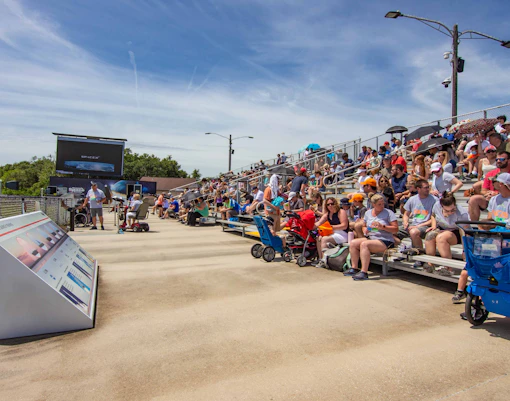
Watching a rocket launch at Kennedy Space Center is an unforgettable experience. As rockets roar into the sky, visitors can witness the power of space exploration from designated viewing areas around the Visitor Complex.

Launch viewing opportunities vary depending on the mission, launch time, operational requirements, and availability. Some launches can be viewed from the main Visitor Complex, while others may offer separately ticketed viewing experiences at designated locations.

*Before planning your visit: Launch dates, timings, and viewing arrangements can change due to weather, technical issues, range operations, and other mission-related requirements. Always check the latest launch status and official viewing information before your visit.

Upcoming launches to look out for

Griffin Mission 1 – Falcon Heavy

  • Target date: December 1, 2026
  • Launch pad: Space Launch Complex 39A (SLC-39A)
  • Launch provider: SpaceX

The Griffin Mission 1 will launch Astrolab's FLEX (Flexible Logistics and Exploration) lunar rover aboard a SpaceX Falcon Heavy rocket. The mission aims to deliver the rover to the Moon's South Pole, specifically Nobile Crater, to support future lunar exploration and surface operations.

APEX 1.0 Lunar Lander Mission 1 – Falcon 9

  • Target date: January 1, 2027
  • Launch pad: Space Launch Complex 39A (SLC-39A)
  • Launch provider: SpaceX

This commercial lunar mission is part of NASA's Commercial Lunar Payload Services (CLPS) initiative. Developed by ispace, Draper, and Karman Space & Defense, the lander is targeting Schrödinger Basin on the Moon to support scientific investigations and lunar exploration.

Artemis IV – Space Launch System (SLS) Block 1B

  • Target date: June 2028
  • Launch pad: Launch Complex 39B (LC-39B)
  • Launch provider: NASA

Artemis IV is a planned NASA mission that will use the Space Launch System (SLS) Block 1B rocket as part of the agency's ongoing lunar exploration program. The mission will advance NASA's efforts to establish a sustained human presence on and around the Moon.

Where to watch rocket launches at Kennedy Space Center

Main Visitor Complex

The North Atlantis Lawn, near Space Shuttle Atlantis, is one of the designated launch viewing areas within the main Visitor Complex. Visitors may be able to watch rockets as they rise above the tree line, accompanied by live launch commentary when provided.

What to expect:

  • Outdoor lawn or bleacher seating, depending on availability
  • Live launch commentary for designated launches
  • Access to Visitor Complex attractions during operating hours, subject to admission and operational availability

Distance from launch pads: Varies by launch location. The Visitor Complex is several miles from many launch pads.

Kennedy Space Center Visitor Complex

Banana Creek launch viewing area

Located near the Apollo/Saturn V Center, Banana Creek offers a different vantage point for designated rocket launches. Its proximity to certain launch pads makes it a popular viewing location when access is available.

What to expect:

  • Outdoor bleacher seating and open lawn areas
  • Viewing opportunities across Banana Creek
  • Access to the Apollo/Saturn V Center when it is open and included with the applicable ticket
  • Dining and shopping facilities, subject to operating hours

Important: The Apollo/Saturn V Center may close during certain launches for private events or operational requirements.

Launch Complex 39 Gantry

The Launch Complex 39 Gantry offers a closer look at launch operations from a designated observation area. Access is not available for every launch and may require a special viewing ticket.

What to know: Check the launch-specific viewing details to confirm whether the gantry is open to visitors, whether a separate ticket is required, and what access restrictions apply.

Viewing rocket launches outside Kennedy Space Center

You may also be able to watch rocket launches from public viewing locations around Cape Canaveral, including Jetty Park. These locations are separate from Kennedy Space Center Visitor Complex and have their own entry, parking, and reservation policies.

Check local access information and launch-day conditions before heading to an off-site viewing location.

How to plan your Kennedy Space Center visit on launch day

1. Check the latest launch schedule: Review the official launch calendar for the latest date, launch window, and mission status. Launch times can change, including on the day of the launch.

2. Confirm your viewing location and ticket: Check whether your launch is viewable with general admission or requires a separately ticketed viewing experience. Make sure your ticket covers the location you want to visit.

3. Arrive early: Give yourself enough time for parking, entry, security checks, and finding your viewing spot. Popular launches can attract large crowds, so arriving early is recommended.

4. Plan the rest of your visit: If your ticket includes access to the Visitor Complex, explore its attractions and exhibits around the launch schedule. Keep in mind that access to certain areas may be restricted during launch operations.

5. Stay updated on launch-day announcements: Follow official updates for changes to launch timing, viewing access, and operational arrangements.

6. Be prepared for delays: Launches can be postponed or scrubbed due to weather, technical issues, or range operations. Keep your plans flexible and check for updates before and during your visit.

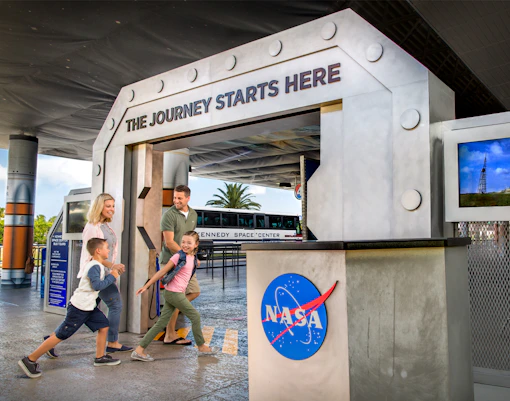
Do you need a separate ticket to watch a rocket launch?

  • Whether you need a separate ticket to watch a rocket launch depends on the mission and the designated viewing location.
  • Kennedy Space Center Visitor Complex admission: Some launches may be viewable from designated areas within the Visitor Complex with regular admission. However, viewing access and availability vary by launch.
  • Special launch viewing tickets: Certain launches offer dedicated viewing experiences at specific locations, which may require an additional ticket alongside general admission.
  • Off-site viewing: You may also be able to watch launches from public viewing locations outside the Visitor Complex. These locations have their own access rules, parking arrangements, and potential fees.
  • Before booking, check the official launch details to confirm the viewing location, ticket requirements, and access arrangements for your chosen launch.

The first launch at KSC

Kennedy space center rocket launches | cape canaveral

On November 9, 1967, the first ever launch took place at Kennedy Space Center at Launch Complex 39 with the first flight test of the 363-foot-tall Saturn V. This rocket was part of the Apollo 4 mission. The rocket’s power of 7.5 million pounds of thrust had a major impact reaching the Launch Control Center (LCC), Press Site and spectators, all three miles away.

This first launch was a part of John. F Kennedy’s vision to build a rocket to the moon. Launches continue to happen at the Kennedy Space Center at regular intervals even today.

History of the Kennedy Space Center

Historic launches at the Kennedy Space Center

Apollo Program

  • From 1967 to 1973 there were a total of 13 Saturn V launches.
  • The first of two uncrewed flights, Apollo 4, in 1967, was also the first rocket launch from KSC.
  • The first launch of Saturn V with a crew took place in December 1968. This was the Apollo 8’s lunar orbiting mission.
  • The following two missions which were Apollo 9 (Earth Orbit) and Apollo 10 (lunar orbit), tested the Lunar Module .
  • Apollo 11 which was launched from Pad A on July 16, 1969, made the first Moon landing on July 20.
  • The Apollo program concluded at KSC with the launches of missions 13 through 17 from 1970-72.
Visit the Saturn V Rocket

Skylab

  • Skylab was the first United States space station launched by NASA.
  • It was engaged for about 24 weeks between May 1973 and February 1974.
  • The main functions were an orbital workshop, a solar observatory, Earth observation, and hundreds of other experiments.
  • The last Saturn V launch put the Skylab space station in orbit. 
  • In 1979, when it was not able to be re-boosted by the Space Shuttle, its orbit decayed and disintegrated in the atmosphere.

The Space Shuttle Program

  • The Space Shuttle program was the fourth human spaceflight program carried out by NASA.
  • It accomplished routine transportation for Earth-to-orbit crew and cargo from 1981 to 2011.
  • Shuttle Discovery and Shuttle Atlantis were the orbiter vehicles that were part of the program for space exploration.
  • The Shuttle is the only winged and crewed spacecraft to have achieved a successful orbit and landing.
Visit Space Shuttle Atlantis

Expendable Launch Vehicles (ELVs)

  • Since 1958, NASA and the military worked together on robotic mission launches.
  • In the 1960s, NASA had two robotic mission launches a month and the frequent number of flights allowed for quick evolution of the vehicles.
  • From the 1950s up until 1978, Kennedy Space Center chose the rocket and payload processing facilities for all robotic missions that were launched in the United States.
  • Kennedy Space Center carried out this function for commercial and foreign missions as well.

Space Station Processing

  • During the 1990s, the Kennedy Space Center began to work with other NASA centers as well as international partners to prepare for processing before the launch of the Space Shuttle.
  • It utilized its experience processing the 22 Spacelab missions in the Operations and Checkout Building to understand ISS processing.
  • Today, the Kennedy Space Center continues to process International Space Station payloads from across the world before launch along with developing its experiments for on orbit.

Present Programs at the Kennedy Space Center

  • Commercial Crew Program: It provides commercially-operated crew transportation service to and from the International Space Station (ISS) under contract to NASA.
  • Exploration Ground Systems Program: NASA is currently designing the next heavy launch vehicle for continuation of human spaceflight.
  • Launch Services Program: This is responsible for NASA's oversight of launch operations and countdown management, providing added quality and mission assurance.
  • Educational Launch of Nanosatellites (ELaNa): This is an initiative to invite more students into the field of science, mathematics, technology, and engineering.
  • Artemis Program: The main goal of this is to return humans to the moon, specifically the lunar south pole, by 2024.
  • Lunar Gateway: This is a planned small space station in lunar orbit intended to serve as a solar-powered communication hub.
  • International Space Station Payloads: This is a framework that has been adopted by the International Space Station to support various types of hardware.
  • Camp KSC: Educational camps in KSC for schoolchildren in spring and summer that focuses on aviation and robotics.

Frequently asked questions about Kennedy Space Center launches

Some launches may be visible from public locations outside Kennedy Space Center Visitor Complex. However, access to viewing locations within the Visitor Complex requires a valid admission ticket, and special viewing experiences may require additional tickets.