Explore Original Rockets & Replicas at the Kennedy Space Center Rocket Garden

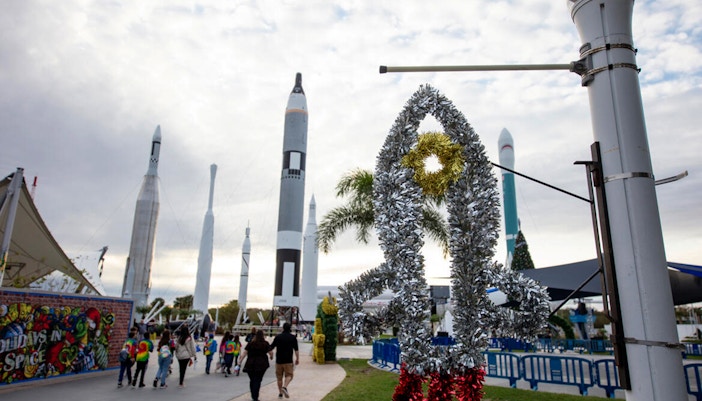
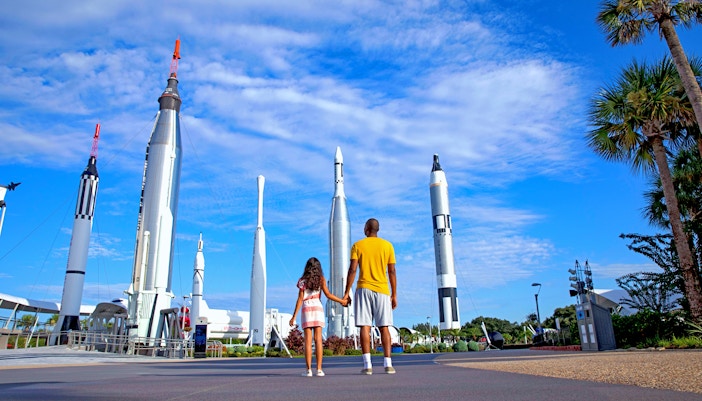
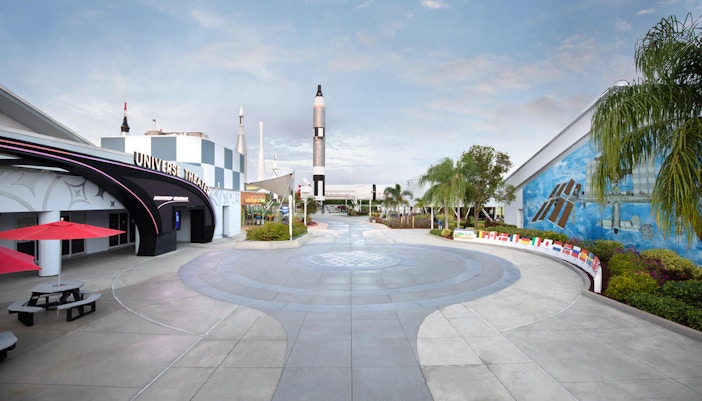
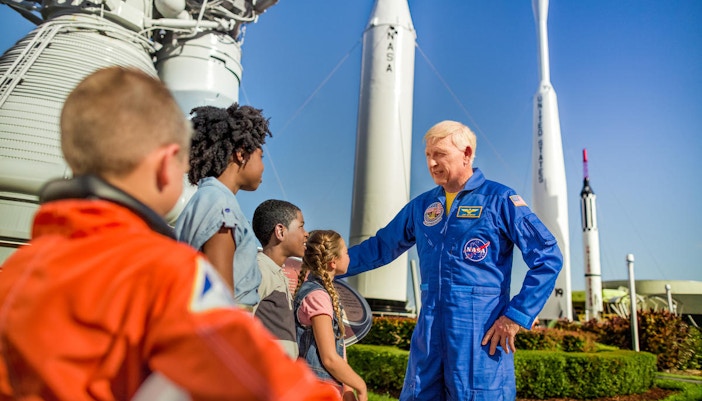
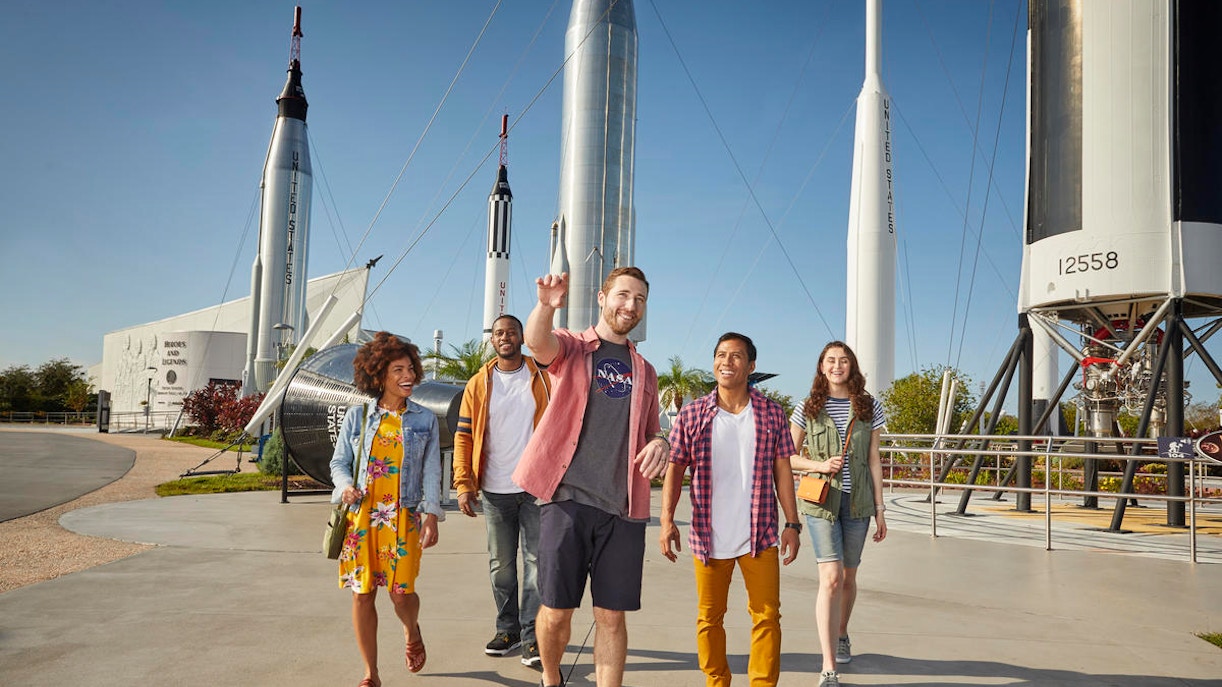
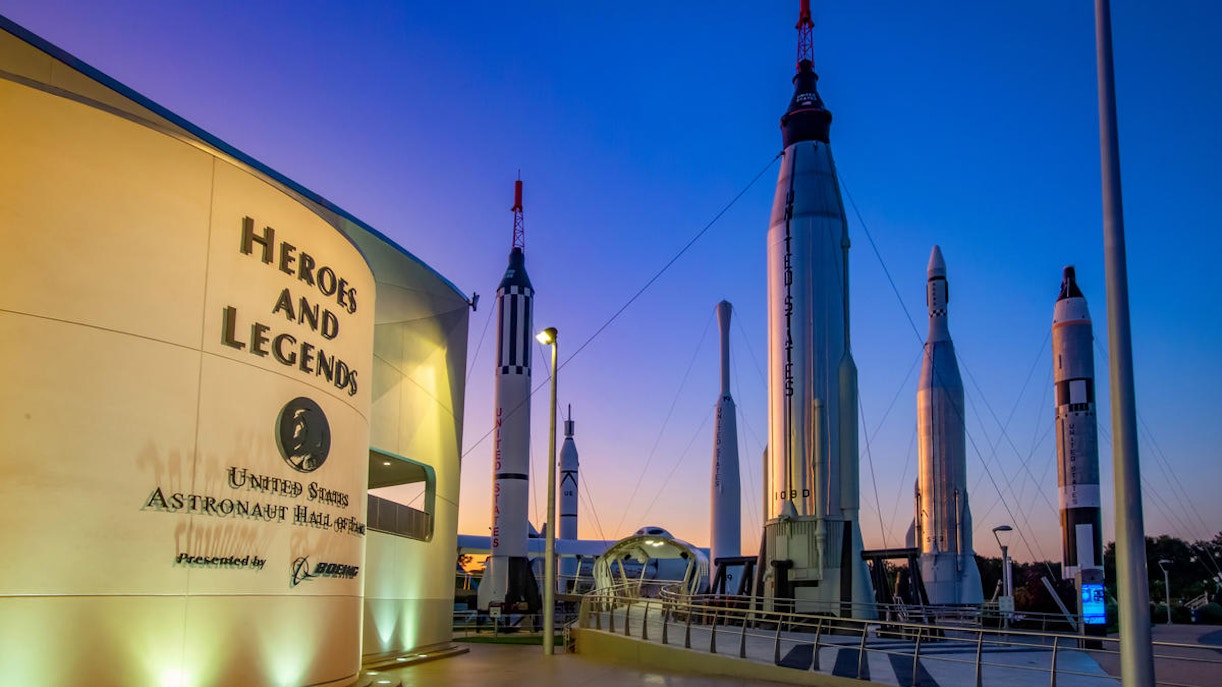
One of the most popular attractions at the Kennedy Space Center, the Rocket Garden is a tribute to the engineers and scientists who worked tirelessly to give flight to America’s space programs for decades. The place is an outdoor display of real rockets that were developed but never flown in space. The Rocket Garden is a must-visit while you’re at the space center because you get to take a closer look and walk among the actual rockets of the Mercury, Gemini, and Apollo programs and experience the thrill of early space flight.

Read on to know more about the Kennedy Space Center Rocket Garden, where it is located, the different rockets found inside, and their notable missions.

What is the Rocket Garden?

Kennedy Space Center | Rocket Garden

The Rocket Garden is home to the most incredible, historic, and real machines that pioneered America’s space exploration program. Most of these rockets have never flown in space but remain an inseparable part of the country’s space history. The place is a tribute to all the scientists and engineers who turned America’s dream of spaceflight into reality starting with the 1961 launch of Mercury-Redstone 3 that completed the first US human space flight.

Marvel at the artifacts on display and take a walk among the giant rockets of the Mercury, Gemini, and Apollo space programs and learn about their most notable missions.
Where is the Rocket Garden?

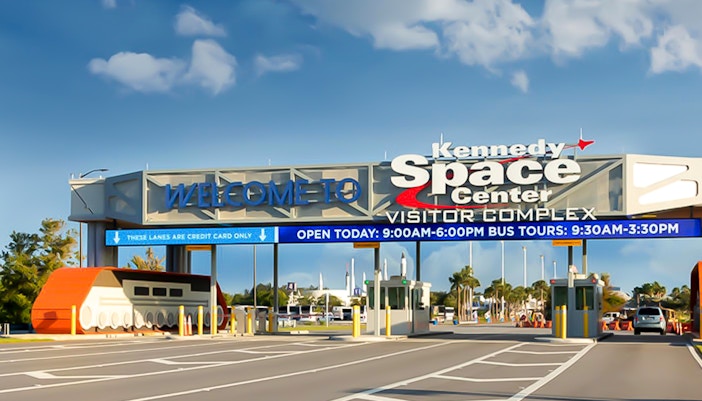
The Rocket Garden is located inside the Kennedy Space Center Visitor Complex. You will find it inside the front entrance beyond Heroes & Legends.

Directions to the Kennedy Space Center

Rocket Garden Kennedy Space Center Highlights

Delta II

The Delta II rocket was used to launch over 150 NASA missions including Mars Rovers Spirit and Opportunity, Phoenix Mars lander, and several GPS missions for the United States Air Force.

Height: 39 meters

Thrust: 1,084,200 pounds

Juno I

The Juno I rocket launched Explorer I, the US’ first satellite, into orbit on 31st January 1958, which eventually led to the establishment of the National Aeronautic Space Administration on 1st October later that year.

Height: 21.7 meters

Thrust: 83,000 pounds

Delta

Delta was used to facilitate communication technologies and launch a Mylar balloon called Echo into orbit in 1960. Echo helped the first live television signal to cross the ocean, writing a new chapter in global communication advancement.

Height: 27 meters

Thrust: 152,000 pounds

Mercury-Redstone

The first launch vehicle to take a crew, Mercury-Redstone, was used to carry Ham, the chimpanzee into space to test spacecraft life support systems in 1961. Later that year, Alan Shepherd launched on a Mercury-Redstone rocket making him the first American to go into space.

Height: 25.3 meters

Thrust: 78,000 pounds

Mercury-Atlas (full-scale replica)

On 20th February 1960, John Glenn became the first American to orbit the Earth after being launched on a Mercury-Atlas rocket. He also proved that humans could work in a microgravity environment.

Height: 29 meters

Thrust: 360,000 pounds

Atlas-Agena

Atlas-Agena launched 8 missions of the Ranger program collecting over 11,000 detailed pictures of the Moon including close-up images of where the Apollo 11 spacecraft would land on the lunar surface.

Height: 32.1 meters

Thrust: 366,213 pounds

Gemini-Titan II

An intercontinental ballistic missile designed to deliver nuclear weapons across the ocean, Gemini-Titan II was a reliable rocket used to launch Gemini missions in 1965 and 1966. However, it was never used for military actions.

Height: 32.9 meters

Thrust: 430,000 pounds

Juno II

The Juno II rocket was sent toward the Moon to capture images including data on radiation and space objects. Its findings allowed NASA to develop more powerful rockets to carry out 33 uncrewed missions to the Moon.

Height: 23.4 meters

Thrust: 150,000 pounds

Saturn 1B

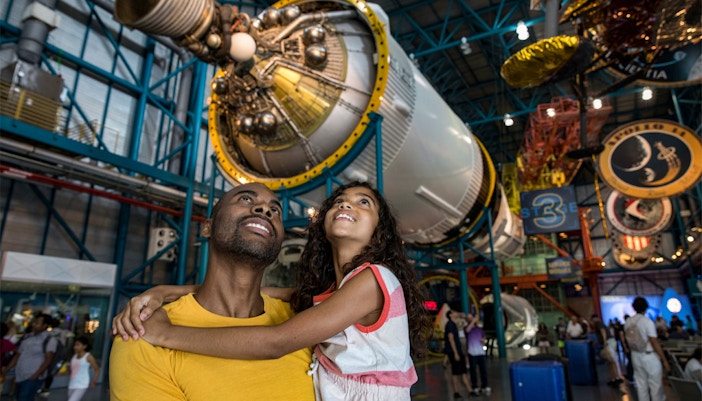
The Saturn 1B rocket launched Apollo 7, the first crewed mission of the Apollo program, and was also used to test early hardware for the missions that followed. Later, it was used to launch three missions to the Skylab space station and is now the only intact and flight-configured Saturn 1B in existence.

Height: 68 meters

Thrust: 1,600,000 pounds

How Do I Visit the Rocket Garden at Kennedy Space Center?

Kennedy Space Center | Rocket Garden

You can visit the Rocket Garden inside the Kennedy Space Center Visitor Complex. However, you will be required to purchase tickets online to be able to go inside the attraction.

Get a first-hand and close look at the range of significant rockets displayed at the Rocket Garden inside the Visitor Complex. Know about the part they played in the history of space exploration in the US and the world. These rockets are real and authentic machines that were used to launch NASA’s Mercury, Gemini, and Apollo missions into space achieving a massive engineering feat of technology and catapulting America’s spaceflight dreams to reality.

Plan Your Visit to Kennedy Space Center

Frequently Asked Questions About the Rocket Garden at the Kennedy Space Center

A. The Rocket Garden is an outdoor display of the most historic rockets that gave flight to America’s space programs.

More Reads

Plan Your Visit to Kennedy Space Center

Kennedy Space Center Timings

Kennedy Space Center Tours